The Setting
New Orleans, Louisiana...
The City of New Orleans was founded in 1718 by Jean-Baptiste Le Moyne de Bienville on behalf of the
French Mississippi Company. Built along the Mississippi River, the settlement was intended from its
beginning to become an important center of trade and French influence in Louisiana.
The Blood followed almost immediately.
Precisely when the Ruby Council first assumed authority is surprisingly difficult to establish. The
earliest surviving Kindred records place organized Council activity in New Orleans by 1721, only three
years after the settlement's founding. By 1722, when New Orleans became the capital of French Louisiana,
the Council's authority over the local Blood was already firmly established.
Even these dates are somewhat misleading, however. The oldest records do not describe the Ruby Council
as something newly created. They refer to the Council as though its authority were already
understood.
There is no surviving account of its formation. No record identifies its founders, and no document
describes the selection of the original Thirteen.
The Ruby Council
The Ruby Council is made up of exactly thirteen Kindred, each identified solely by their Seat and the
animal represented by their mask. Their true names are unknown, their faces are never seen, and reliable
records concerning their identities appear simply not to exist.
The Council governs collectively under the Sanguine Constitution, enacting the Laws of New Orleans and
directing the institutions of Central. Dragon, Seat 01, serves as First Among Equals, presiding over the
Council without standing above it.
The Thirteen are:

Dragon
Dragon serves as First Among Equals of the Ruby Council and presides over its proceedings. Like all members of the Council, his true identity remains unknown.
A towering and unmistakable figure, Dragon wears a blood-red tailored suit beneath a dark grey coat worn loose across his shoulders. His full helm resembles a terrifying Eastern dragon, finished in black with intense crimson lenses.
Tiger
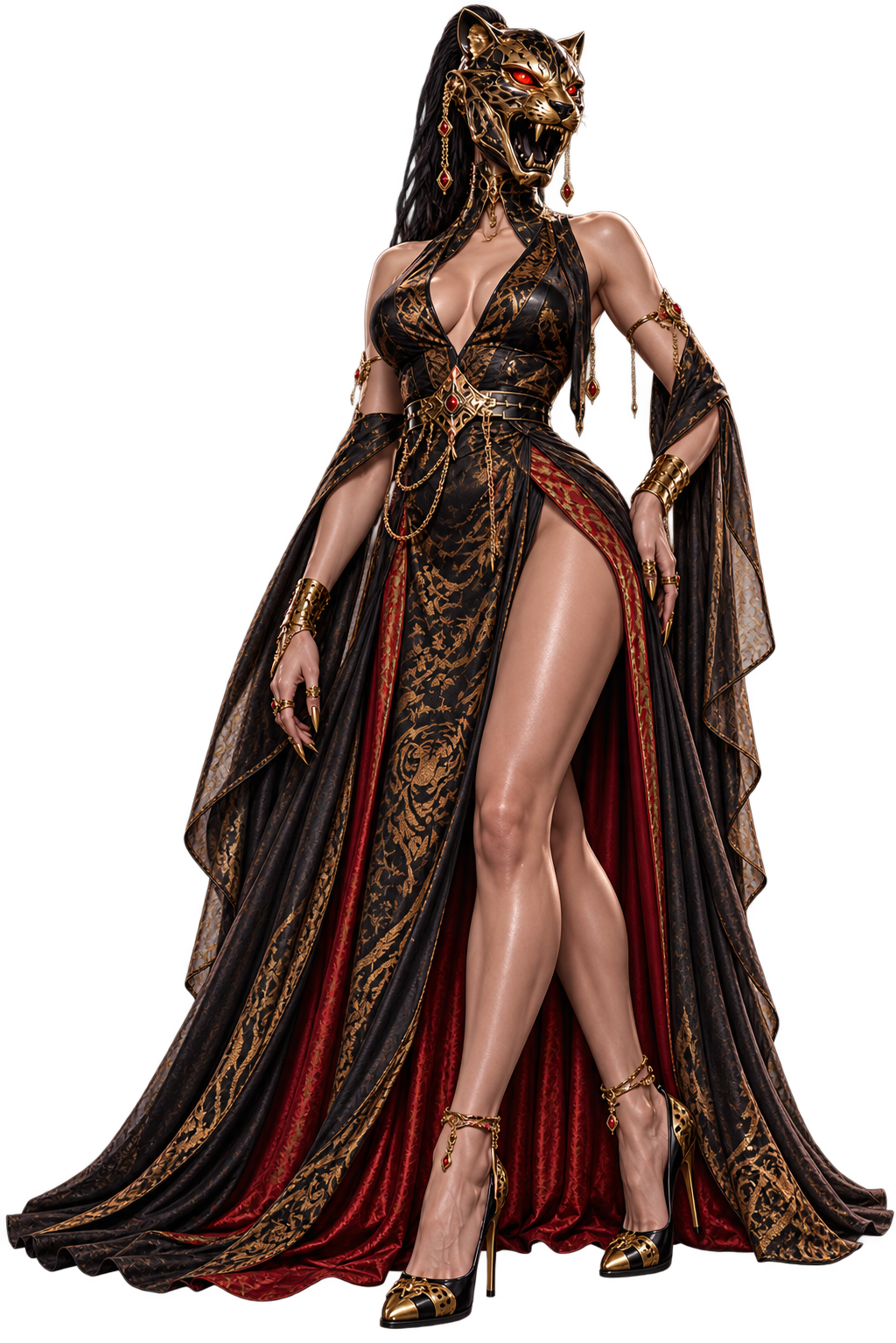
Tiger occupies Seat 02 of the Ruby Council. Like the other members of the Council, her true name, history, Clan, and lineage remain unknown.
Tiger is a lithe woman with a picturesque figure. She wears an elegant long dress cut with high slits and stiletto heels. Her full helm takes the form of a roaring tiger.
Hyena
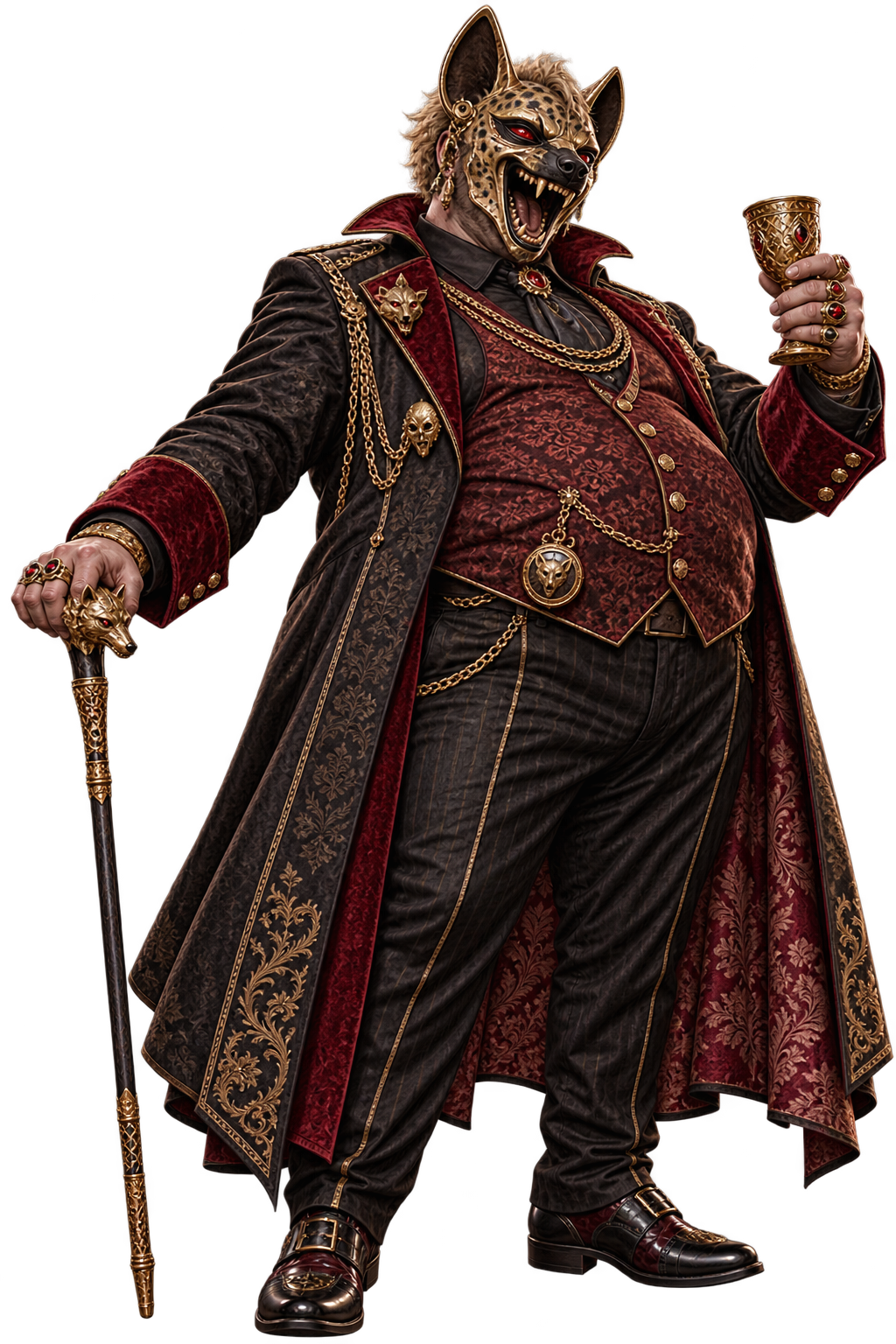
Hyena occupies Seat 03 of the Ruby Council. Whatever identity he possessed beyond that Office is unknown to the Kindred population of New Orleans.
Hyena is a short, extraordinarily rotund man, nearly as broad as he is tall. Those who mistake his considerable bulk for simple fat are generally considered foolish. Short, dirty-blond hair is visible behind his full helm, which is fashioned in the likeness of a laughing hyena.
Serpent
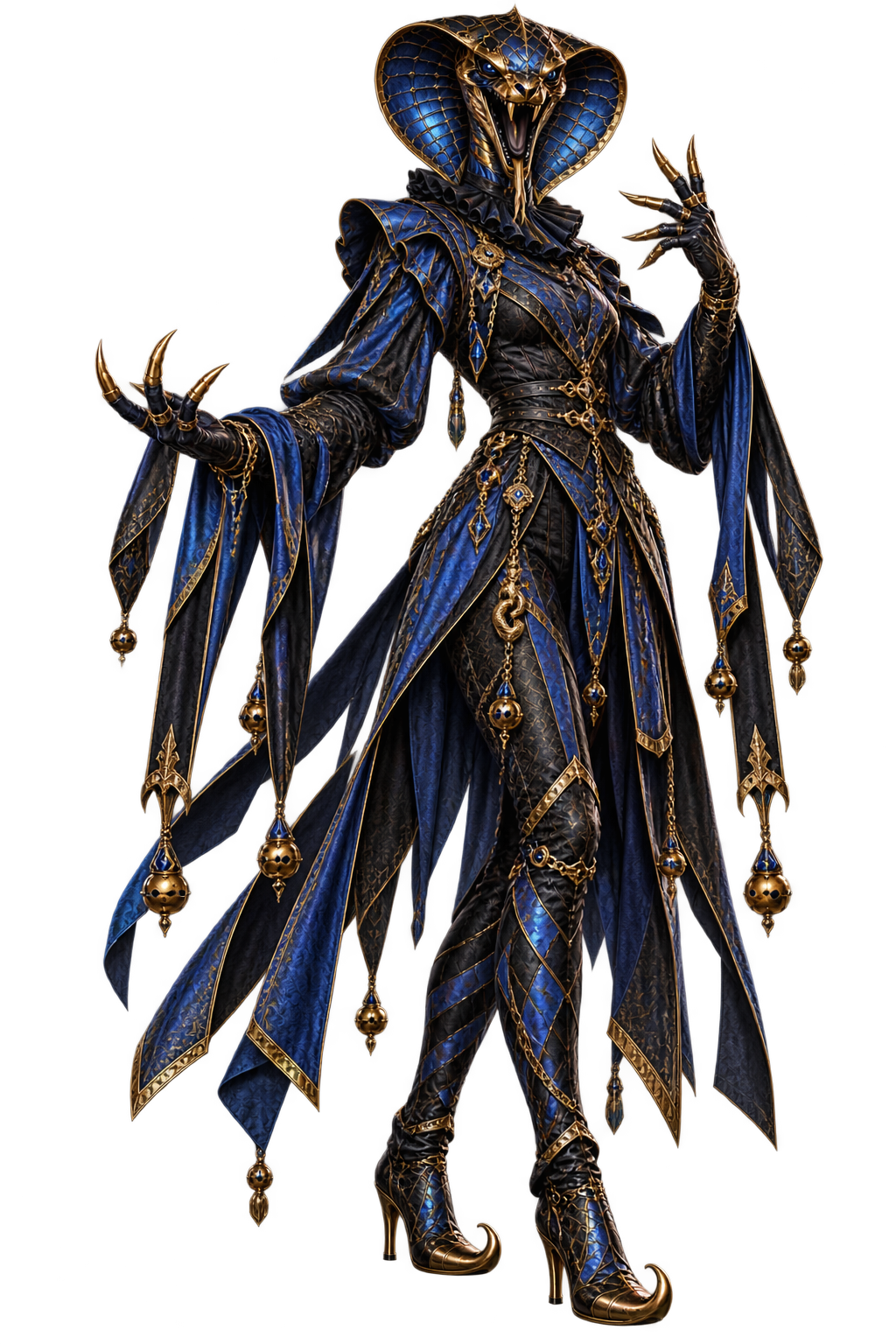
Serpent occupies Seat 04 of the Ruby Council. Even Serpent's sex is uncertain; neither appearance nor manner reliably identifies Serpent as male or female.
Serpent dresses in an elaborate, jester-like arrangement of blue and black. The full helm resembles a hissing cobra, complete with a dramatically flared hood.
Eagle
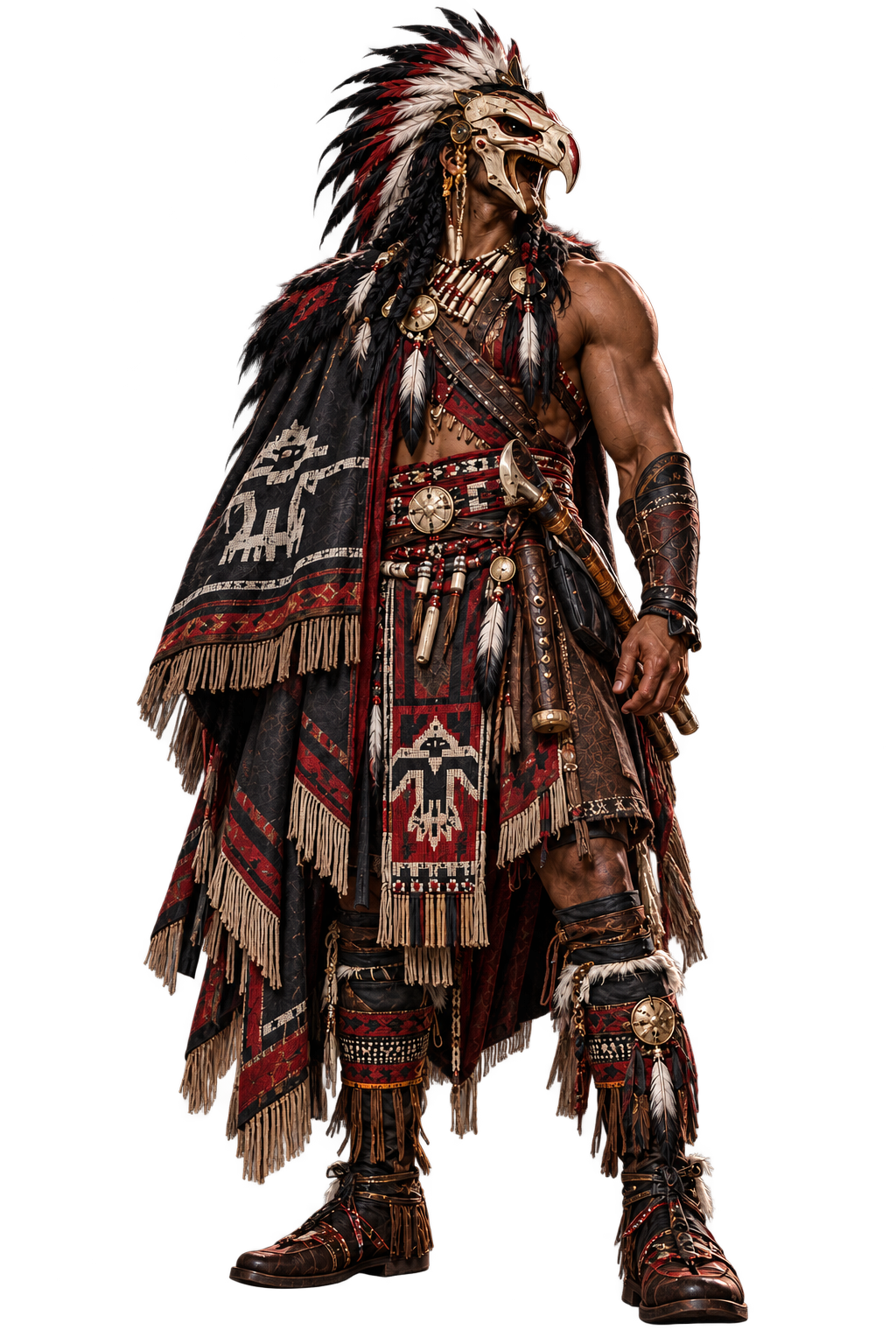
Eagle occupies Seat 05 of the Ruby Council. His identity, Clan, lineage, and personal history remain concealed.
Eagle is an Indigenous man with a warm-brown complexion and thick, dark hair. His clothing is strongly associated with traditional Mohawk and Haudenosaunee warrior dress. His full helm resembles an eagle and appears to have been carved from aged bone.
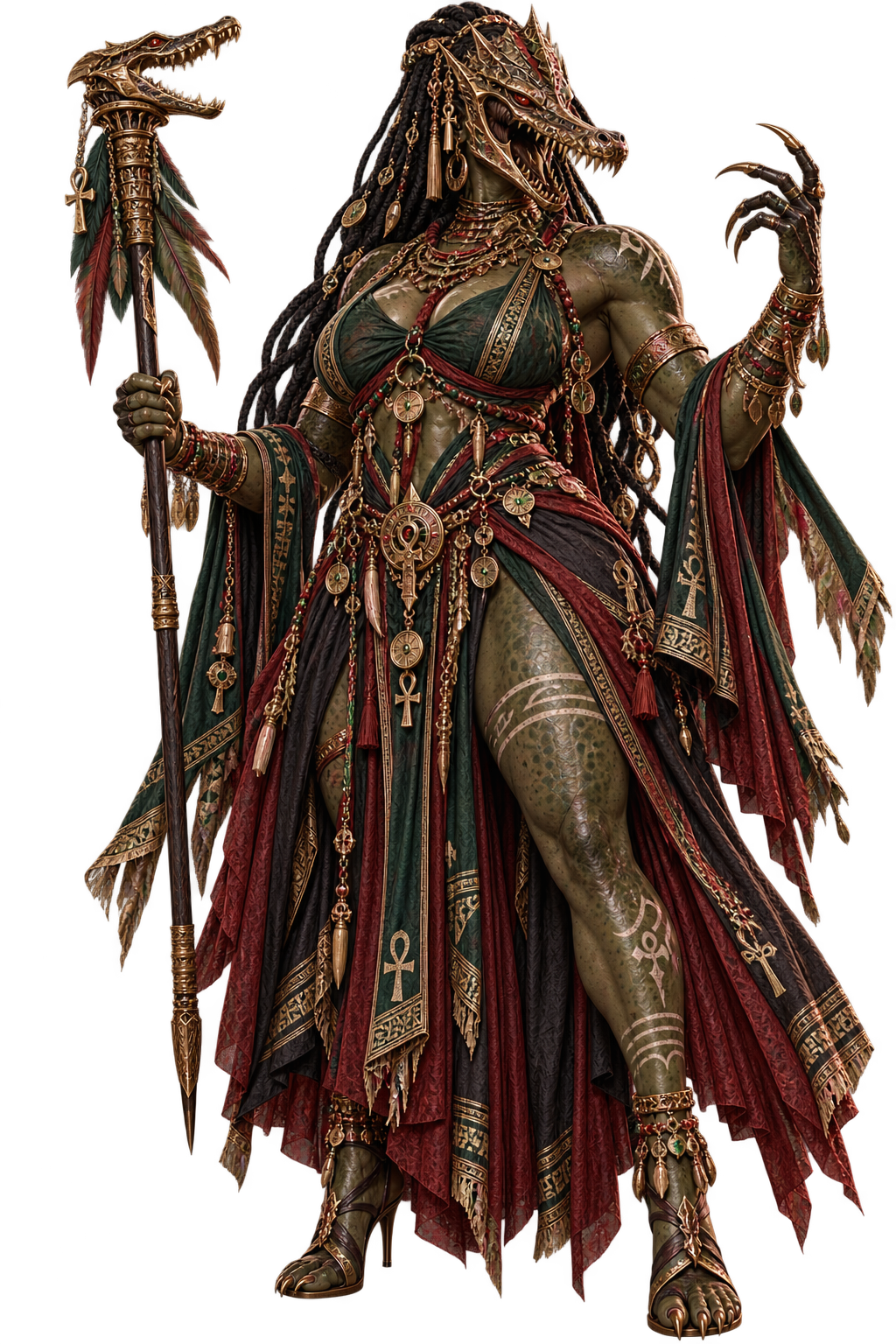
Crocodile
Crocodile occupies Seat 06 of the Ruby Council. Her unusual appearance has inspired considerable speculation, none of which Central has seen fit to clarify.
She is a towering, powerfully built woman with broad shoulders, thick hips, and an exceptionally athletic physique. Her skin has a distinctive mottled-green tone. She dresses in traditional Voodoo priestess-inspired garb and wears a full helm shaped like a snapping crocodile.

Bear
Bear occupies Seat 07 and is unquestionably the most physically unusual member of the Ruby Council.
Bear appears to be an enormous polar bear. He wears no clothing or conventional equipment and is fully capable of human speech. Unlike the other Councilors, Bear does not appear to wear a separate helmet; his face itself bears the unmistakable form of his Council mask.
Central offers no public explanation for Bear's nature, origin, or appearance.
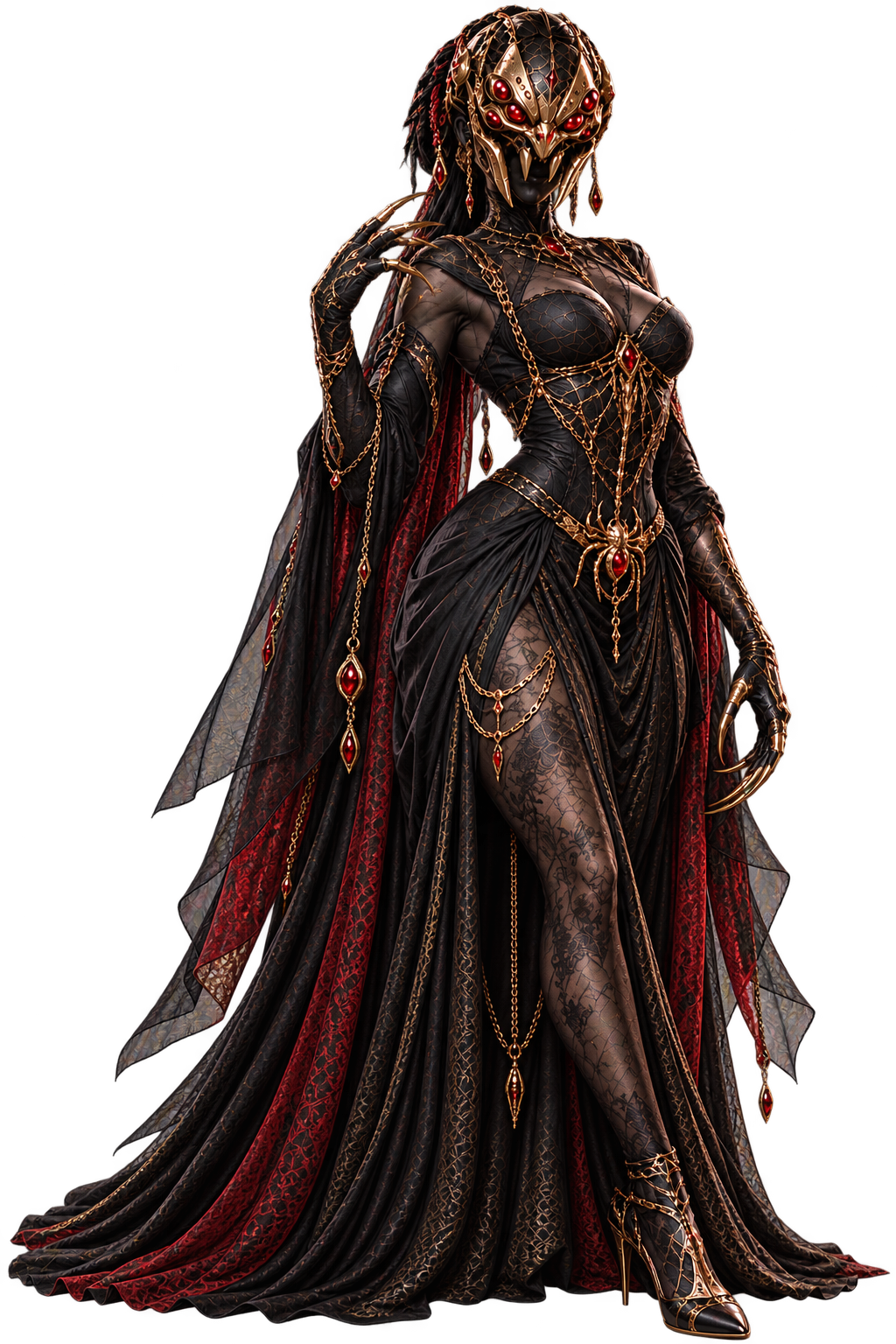
Spider
Spider occupies Seat 08 of the Ruby Council. She presents herself with an elegance that does little to diminish her distinctly dangerous presence.
Spider dresses almost entirely in black. Her elaborate red-and-gold full helm resembles the many-eyed face of a spider, giving her one of the Council's most immediately recognizable silhouettes.
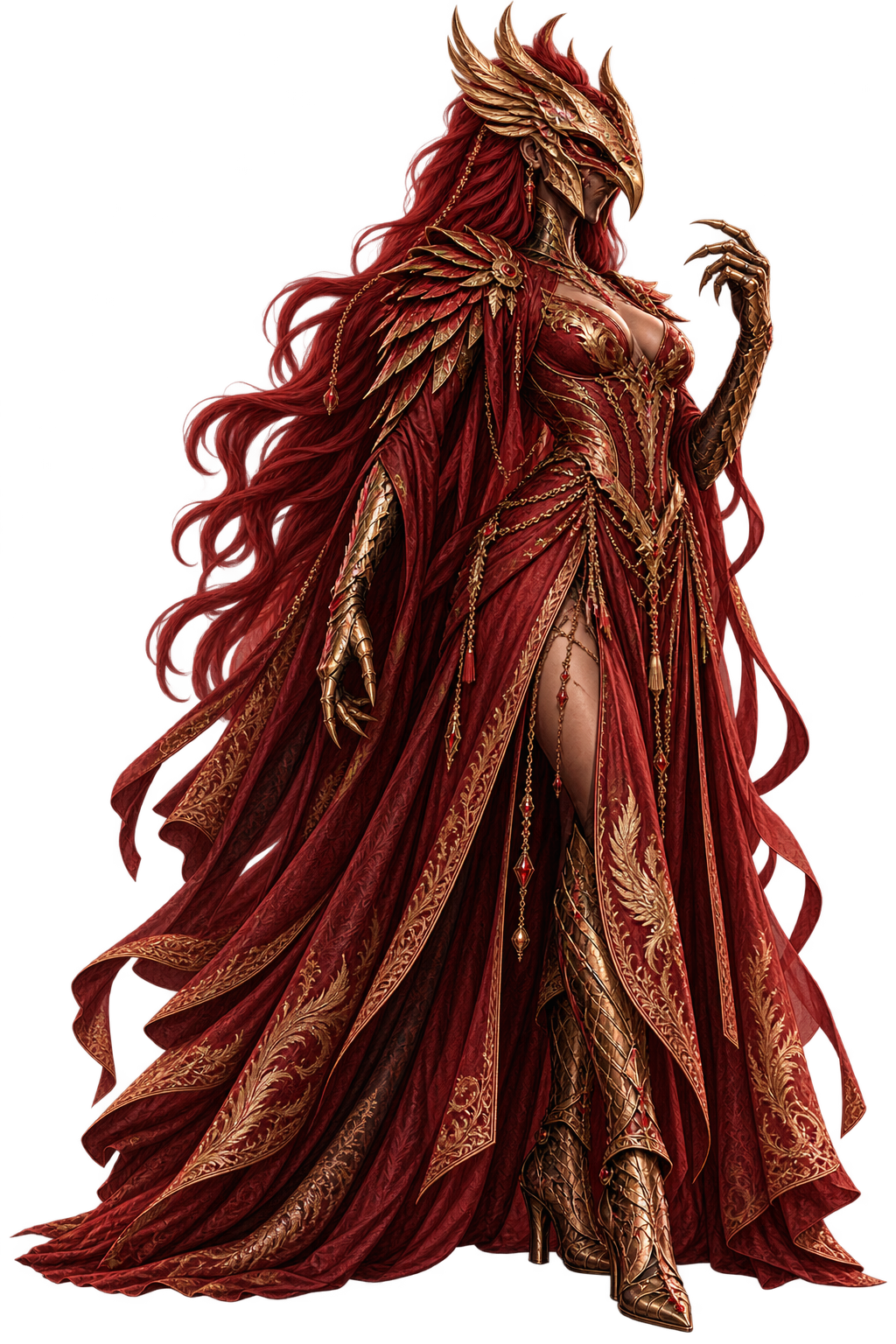
Phoenix
Phoenix occupies Seat 09 of the Ruby Council and carries the imagery of her namesake throughout her appearance.
She has striking red hair and dresses predominantly in shades of crimson and red. Her clothing and ornamentation evoke flame without requiring literal fire, while her full helm is fashioned in the likeness of a phoenix.
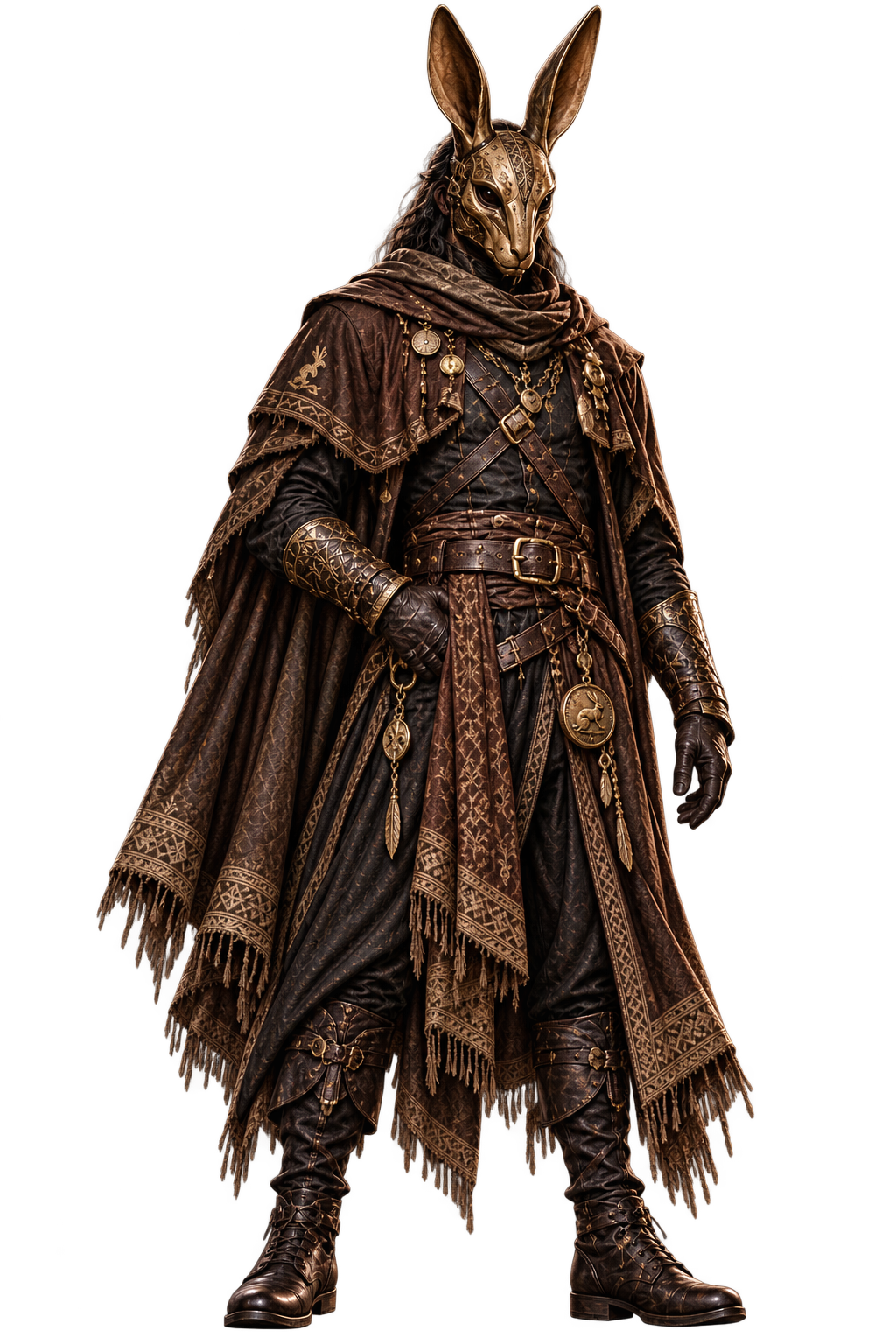
Hare
Hare occupies Seat 10 of the Ruby Council. Compared with several of his visually extravagant counterparts, his presentation is comparatively restrained.
Hare is a dark-haired man who dresses predominantly in dark browns and other subdued earth tones. His full helm bears the long ears and recognizable features of a hare.
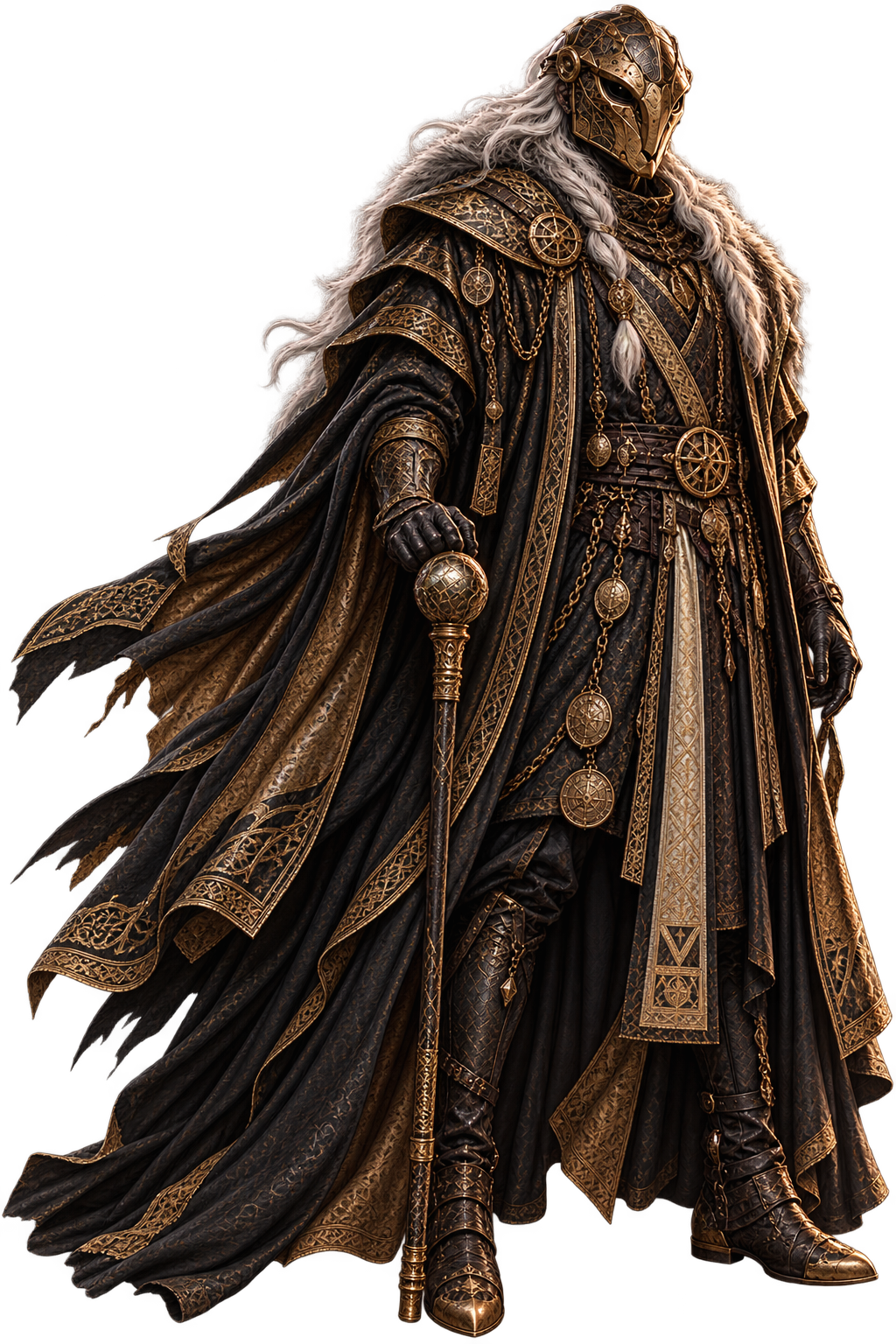
Tortoise
Tortoise occupies Seat 11 of the Ruby Council. His identity, history, Clan, lineage, and circumstances prior to assuming his Seat remain unknown.
Tortoise is a silver-haired man whose appearance carries a distinctly stately and reserved quality. He dresses in dark, richly detailed formal garments accented with bronze and antique gold. His full helm is broad and heavily layered, incorporating the plated forms and protective appearance associated with the shell of a tortoise.
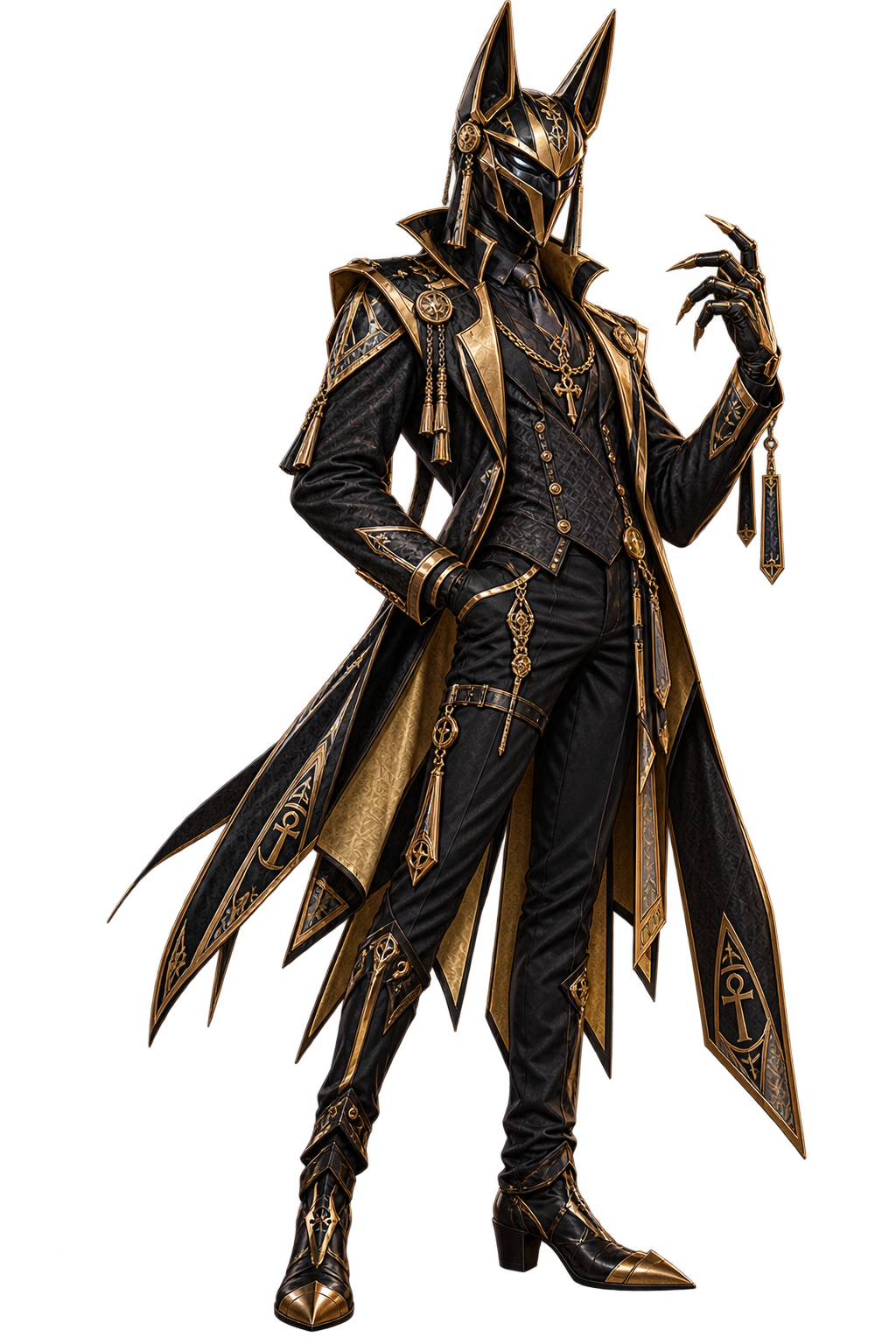
Jackal
Jackal occupies Seat 12 of the Ruby Council. As with the remainder of the Thirteen, virtually nothing reliable is publicly known concerning the person behind the Office.
Jackal is a somewhat tall, extraordinarily thin man with an almost skeletal build. His clothing is dark, formal, and sharply tailored to his narrow frame. His mask is unique among the Council: rather than presenting an exposed sculpted face, the jackal-shaped full helm incorporates a dark, opaque visor across its face.
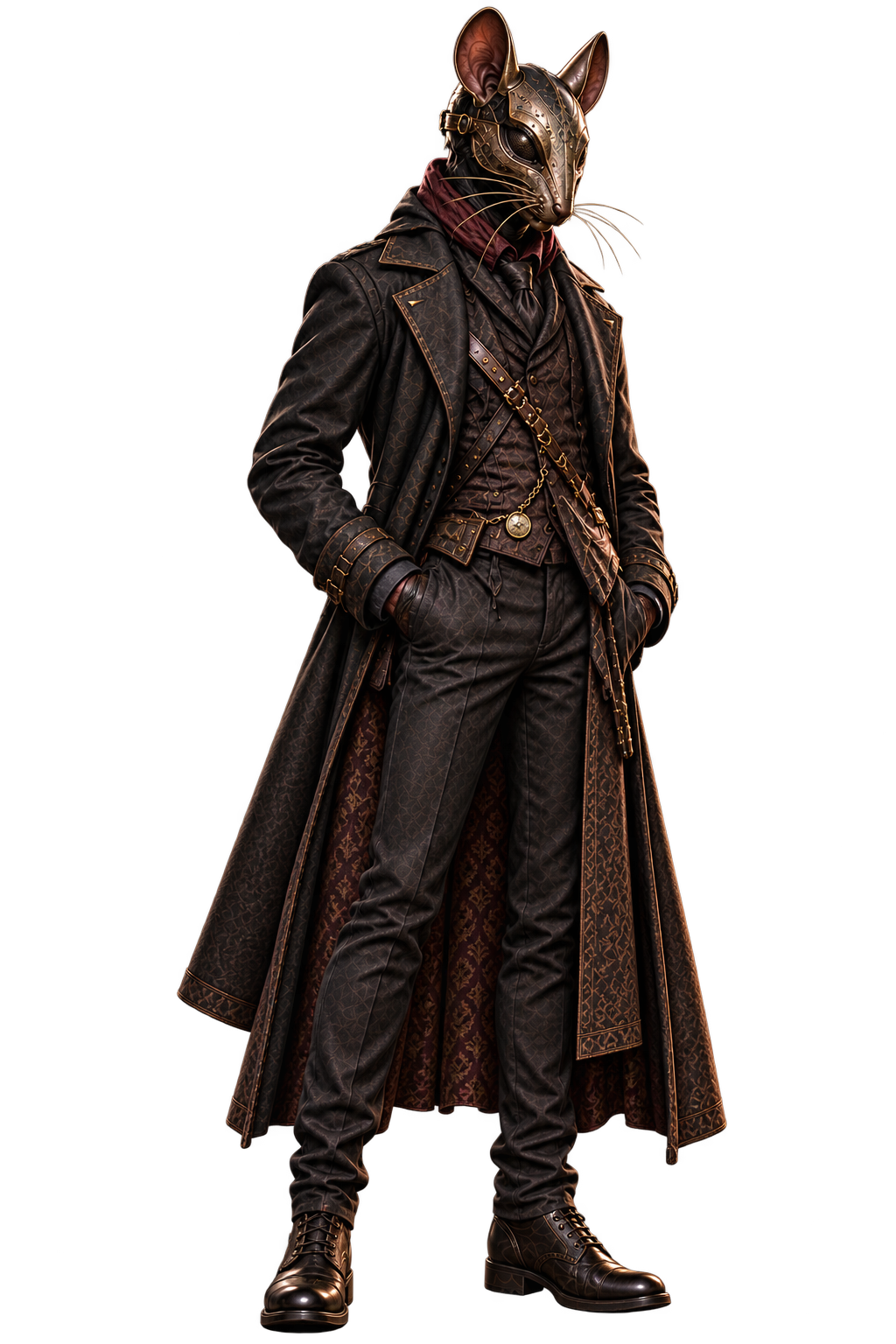
Rat
Rat occupies Seat 13 of the Ruby Council. His true identity remains as thoroughly concealed as those of the other Councilors.
Rat is perhaps the most deliberately nondescript member of the Thirteen. He is a man of otherwise unremarkable appearance who dresses without the theatrical grandeur displayed by several of his counterparts. The exception is his unmistakable full helm: the face of a rat, complete with prominent ears and long whiskers.
Central Personnel
The Ruby Council does not govern New Orleans alone. Beneath the Thirteen exists a substantial body of Kindred charged with the day-to-day operation, protection, and administration of the City. Collectively, these individuals are most commonly referred to as Central Personnel.
Each Office has a clearly defined purpose and its own distinctive uniform and mask. Personal identity is deliberately secondary to Office; when acting on behalf of Central, it is the authority and responsibility of the position that matters.
Their powers are not interchangeable. An Administrator is not an Enforcer. A Warden is not a judge. A Physician cannot issue a sentence simply because Central employs them. Every Office derives its authority from the Sanguine Constitution and the Laws enacted beneath it.
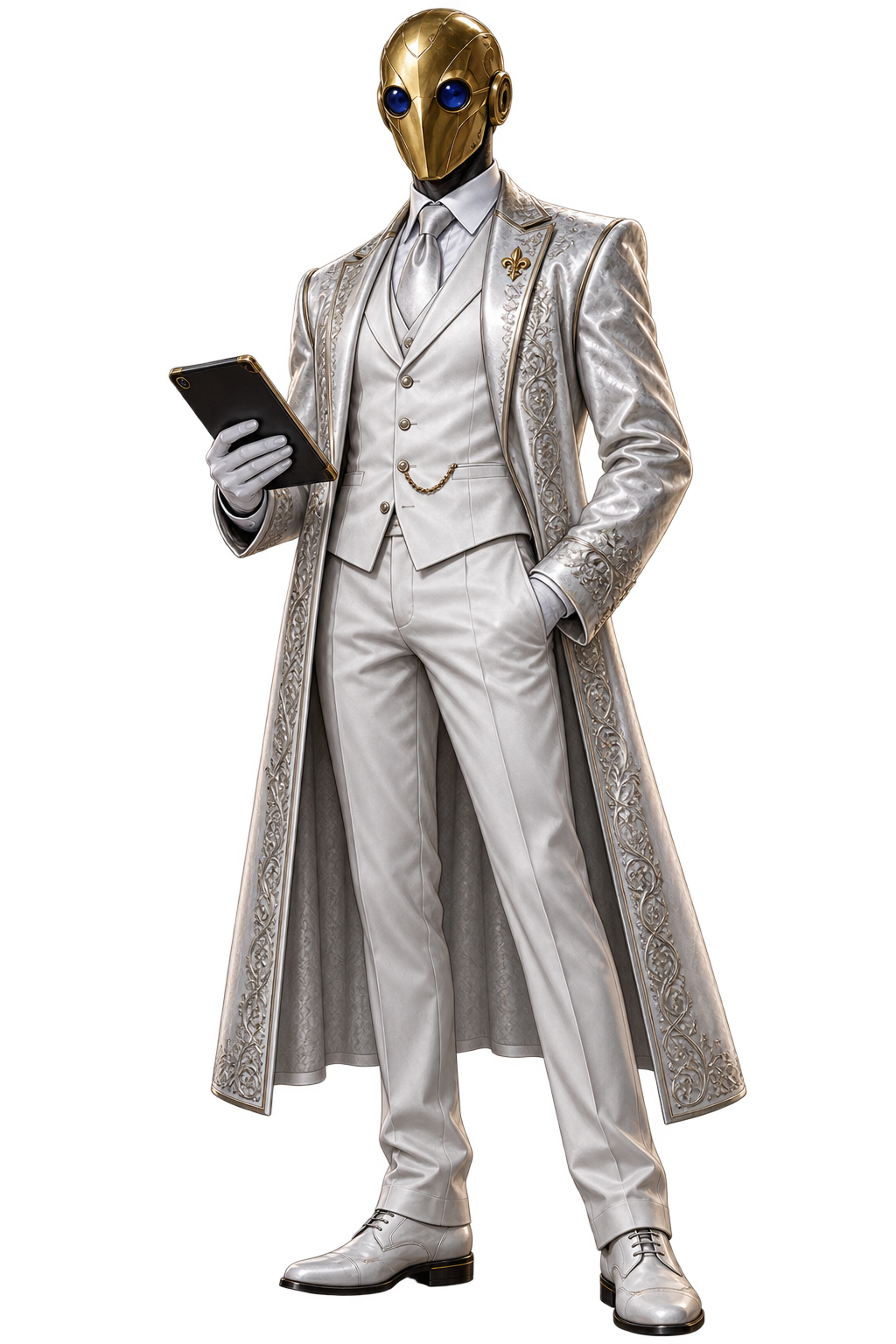
Administrators
Administrators are the documentary backbone of Central. They maintain the records upon which the government of Kindred New Orleans depends, including registrations, Havens, Domains, Notices, licenses, legal filings, judgments, official correspondence, and the countless other records necessary to keep the City functioning.
Administrators are notoriously precise. Records are expected to be complete, accurate, current, and properly authenticated. They issue official Notices, process declarations and applications, maintain Central's registries, and are often the first representatives of Central encountered by a newcomer to the City.
An Administrator may request information, issue documentation, or communicate a lawful requirement of Central, but an Administrator is not a judge. When compliance must be compelled or a matter requires judgment, other Offices become involved.
Administrators are immediately recognizable by their immaculate white suits, long silver jackets, and smooth golden full-face masks with brilliant blue lenses. Their appearance is standardized, immaculate, and deliberately impersonal.
Enforcers
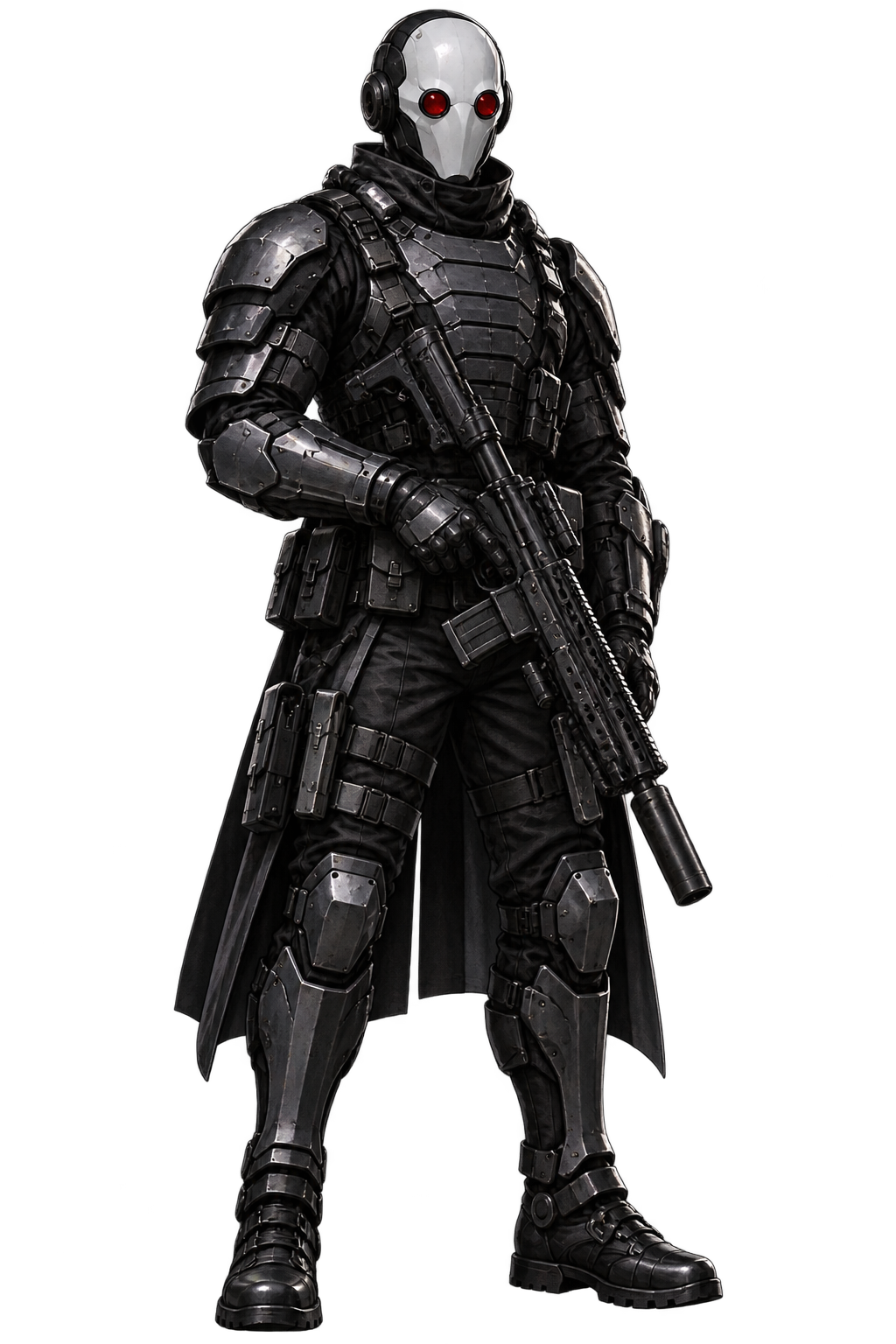
Enforcers are the judicial and enforcement arm of Central. They investigate violations of Law, execute lawful Orders, conduct Collections, intervene in Breaches of the Peace, pronounce judgment, impose sentence, and, when necessary, carry that sentence through to its conclusion.
An Enforcer is not merely a police officer. Enforcers are trained in the Sanguine Constitution, Council Acts, controlling precedent, procedure, evidence, and the lawful use of force to an extraordinary degree. They are the judiciary of Kindred New Orleans.
Straightforward violations with clearly established facts may be judged by an Enforcer immediately. Serious, contested, unusual, or high-penalty matters may proceed to Court, where Enforcers themselves serve as the judges. When lawful sentence requires execution, they may also serve as executioner.
Enforcers are known for an almost unnerving degree of calm. They do not posture or engage in unnecessary displays of aggression. When violence becomes necessary, however, they employ it with extreme speed and efficiency and are expected to stop the moment its lawful necessity ends.
Every Enforcer wears the same black combat armor, constructed from stab-resistant, fire-resistant, and conductive layers reinforced with offset tungsten-carbide plating. Their helmets are similarly armored, with chalk-white faceplates and red lenses. No personal markings distinguish one Enforcer from another.
Wardens
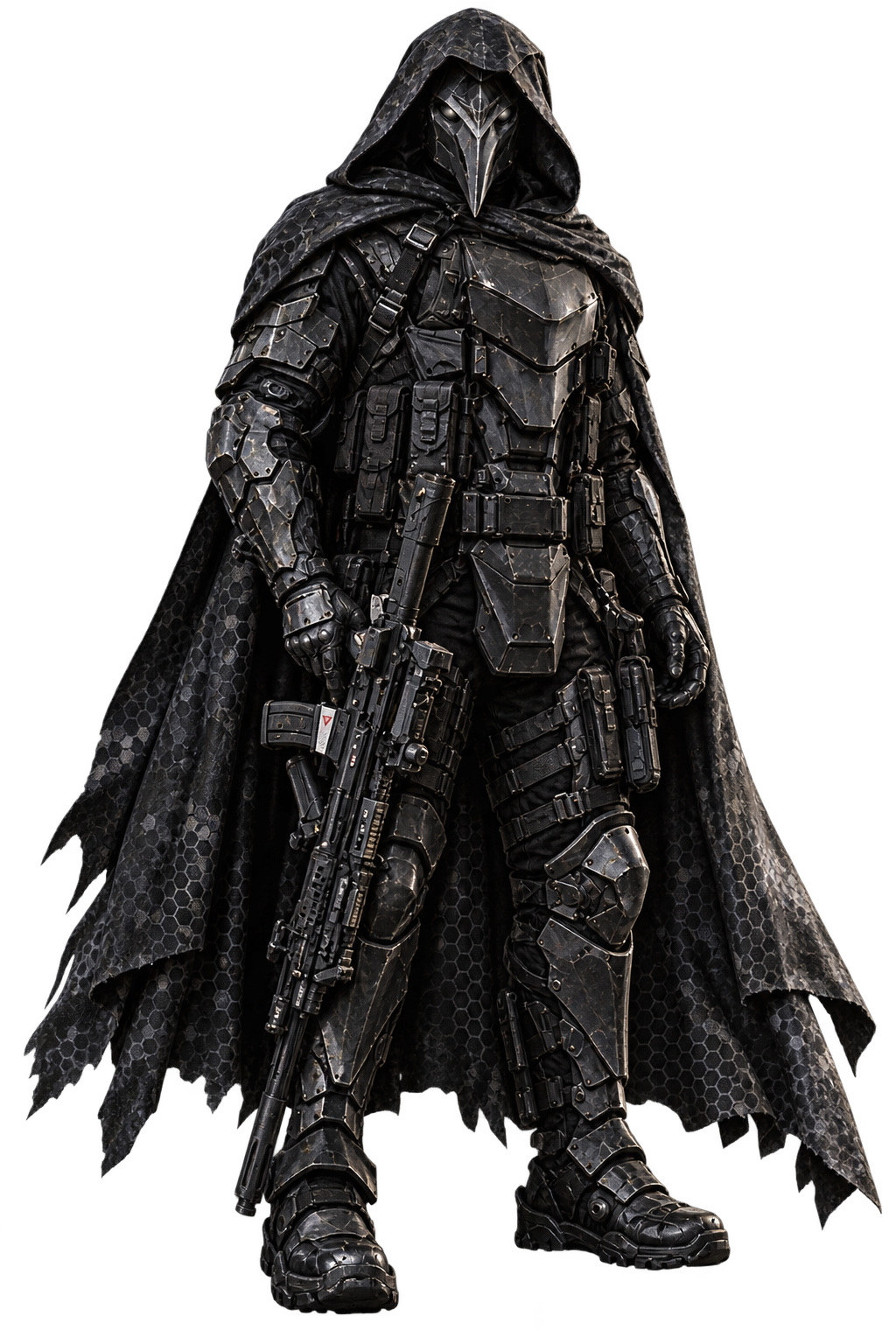
Wardens are Central's principal security and tactical response personnel. Where Enforcers exist to uphold and judge the Law, Wardens exist to protect the institutions, people, infrastructure, and locations upon which the City depends.
They guard Central, secure sensitive facilities, protect detention areas and archives, escort important personnel and materials, reinforce threatened locations, and respond to situations requiring specialized tactical capability. Their equipment and loadouts vary considerably depending upon the engagement for which they are deployed.
Wardens are not Enforcers and possess no judicial authority merely by virtue of their Office. A Warden may secure a scene, defend a protected location, restrain an immediate threat, or carry out a lawful security Order, but judgment of criminal guilt belongs to Enforcement.
Their armor resembles that of the Enforcers but is heavier, bulkier, and more modular. Their helmets evoke the profile of an old plague doctor's mask without directly reproducing one, using sharper and more jagged forms with pale grey lenses.
Every Warden also wears a specialized cloak capable of active camouflage. When engaged, the cloak adapts to the surrounding environment, allowing an otherwise heavily armored Warden to become remarkably difficult to distinguish from their surroundings.
Physicians
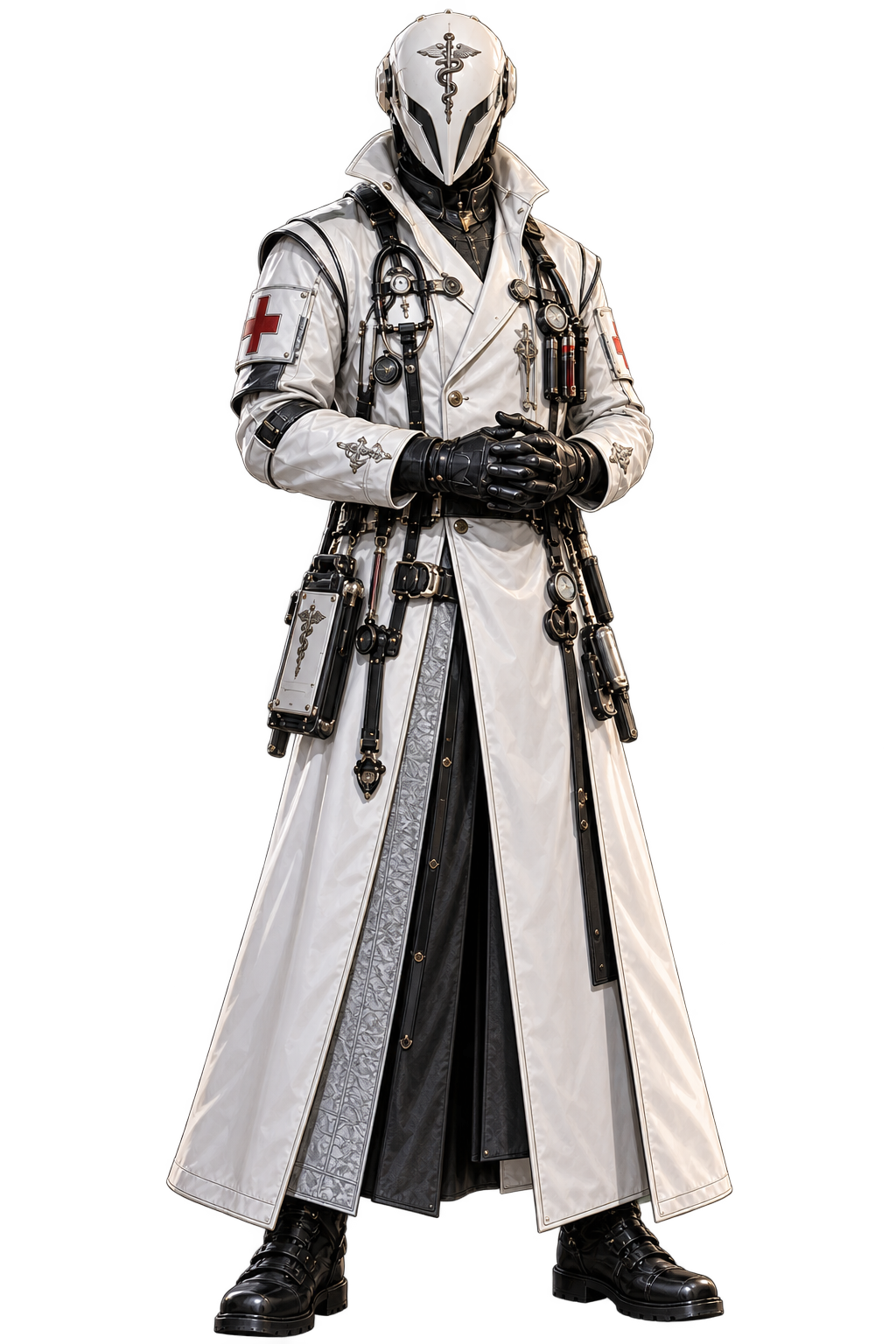
Physicians are the doctors, surgeons, researchers, medical specialists, and forensic experts of Central. Their work concerns the unusual medical realities of the Blood as well as the treatment of Ghouls, mortals, and others whose conditions intersect with Kindred society.
Central Physicians study Vitae, torpor, supernatural injury, the effects of Hunger, blood-borne conditions, unusual manifestations of the Condition, and injuries that ordinary mortal medicine was never designed to understand. Individual Physicians may possess dramatically different specialties.
Physicians also serve an important forensic role. When physical evidence requires medical interpretation, cause of injury is disputed, an unusual Blood condition must be identified, or a person's physical state becomes relevant to a Court proceeding, a Physician may provide examination and expert findings.
Their uniforms resemble traditional medical attire adapted to Central's distinctive appearance. White coats and clinical equipment are paired with very soft-white full helmets. Each helmet bears the Rod of Asclepius, the traditional medical symbol of a single serpent entwined around a staff.
Treasury
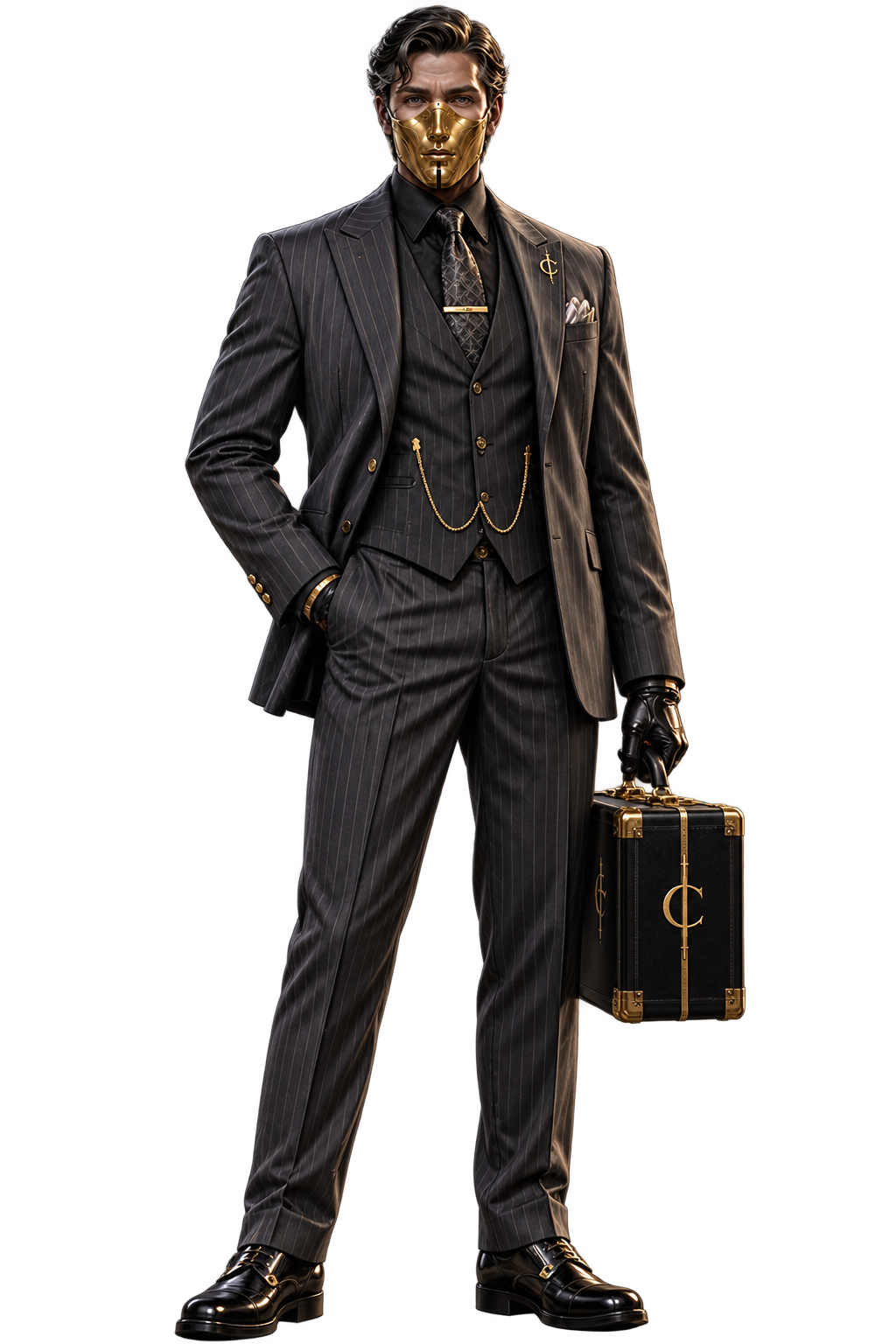
Treasury is responsible for the wealth, property, material resources, financial obligations, and economic interests of Central. Its agents ensure that a government intended to survive indefinitely possesses the resources necessary to actually do so.
Treasury manages accounts, investments, procurement, property, material reserves, lawful revenues, expenditures, contracts, transfers, and other assets held on behalf of Central. It also maintains the financial records necessary to distinguish public property from the personal wealth of those who happen to hold Office.
Treasury Agents may become involved when a lawful fine, restitution, forfeiture, contractual obligation, registered Boon, or other financial matter requires formal accounting or transfer. Their presence does not itself indicate a criminal investigation. Sometimes Central simply wants its accounts settled.
Treasury Agents are unusual among Central Personnel because their masks do not conceal the entire face. They wear charcoal-grey suits with a contrasting grey pinstripe. Their polished golden masks cover the lower face from approximately the bridge of the nose downward, with an expressionless human face etched into the metal.
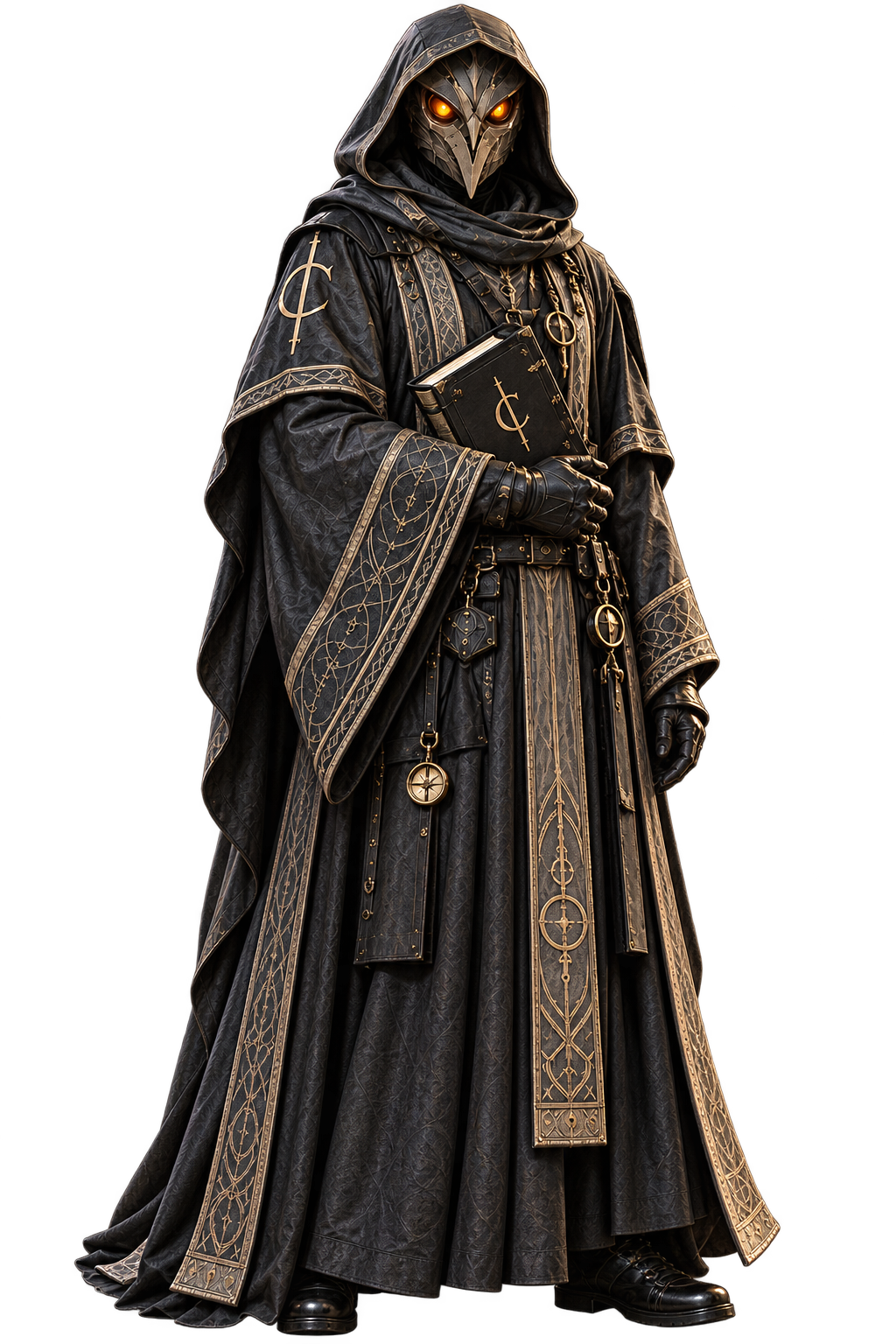
Proctors
Proctors are Central's educators and examiners. Their purpose is to ensure that the Governed have meaningful access to the knowledge necessary to live within New Orleans without accidentally becoming a danger to themselves, the City, or the Peace.
Newcomer orientation, instruction in the Sanguine Constitution, education concerning civic duties, lawful hunting practices, Breach prevention, and other matters of public knowledge fall within their Office. Where the Law requires a person to demonstrate knowledge or competency, a Proctor may administer the examination.
Their existence reflects an important principle of the Sanguine Constitution: Central cannot reasonably expect residents to obey rules it makes inaccessible to them. Proctors therefore do more than teach. They help ensure that the Law itself remains something the Governed can actually learn and understand.
Proctors wear long robes in muted colors with raised hoods that conceal most of the head. Their full helmets resemble the face of an owl, chosen for its association with wisdom and knowledge. Bright orange lenses shine from beneath the hood and make a Proctor immediately recognizable.